Head to Head Battle

Compact Workhorses: Kubota L3902 vs John Deere 3038E vs Massey Ferguson 2850E
By Garrett Vance (Machinery Field Test Appraiser) • Published November 23, 2026 • 13 min read
Compact Workhorses: Kubota L3902 vs John Deere 3038E vs Massey Ferguson 2850E
speed Quick Recommendation Matrix

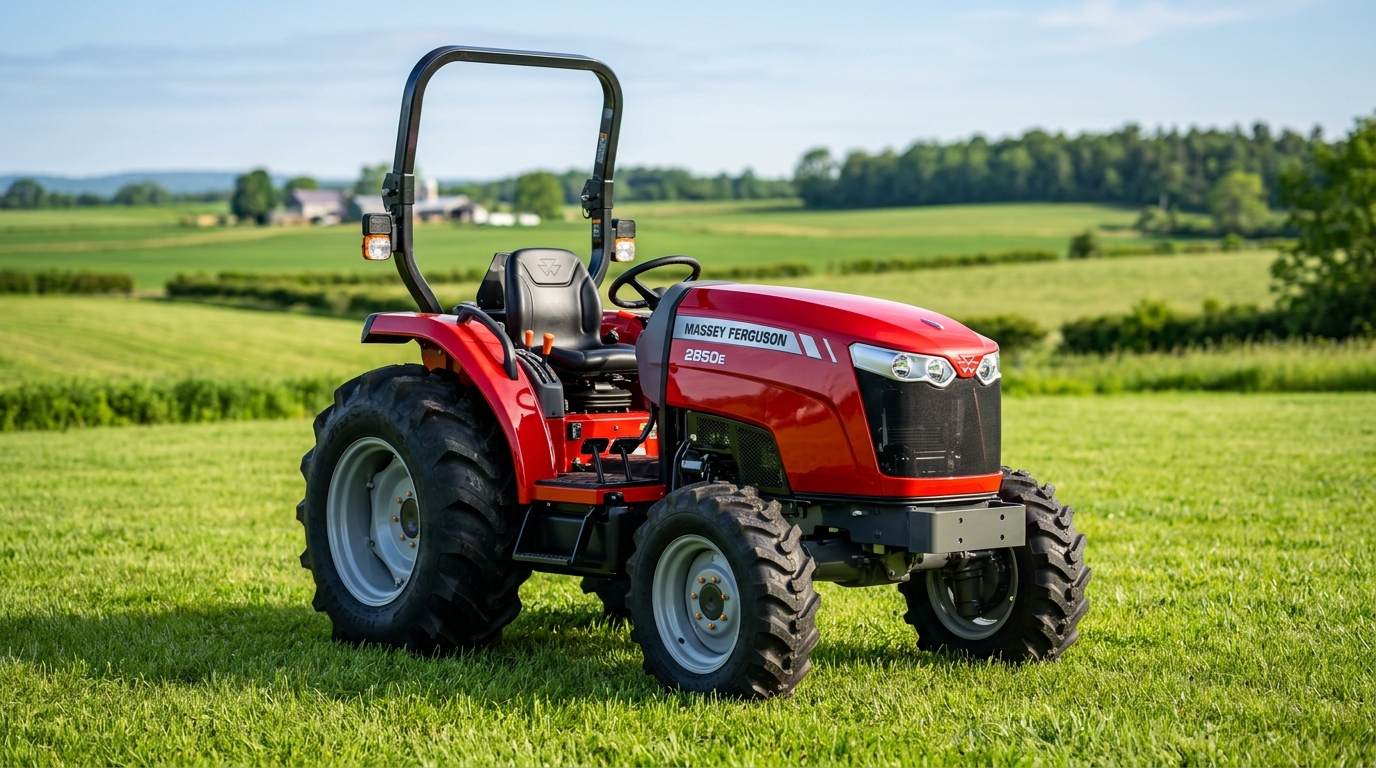
The 35 to 50 horsepower compact tractor category is the primary sales volume leader for 10 to 30 acre homesteads. The John Deere 3038E is the economy value leader, offering 36.7 horsepower, twin hydro pedals, and high maneuverability on a lightweight 2,222-pound chassis ideal for mowing and light grading. The Kubota L3902 represents the balanced mid-weight benchmark, featuring a 37.5 hp turbocharged common-rail diesel, 2,778-pound cast-iron frame, 1,985-pound hitch lift, and legendary long-term resale value. The Massey Ferguson 2850E is the heavy-duty powerhouse of the group: built on a massive 3,869-pound cast-steel chassis with a 4-cylinder 48.8 hp turbocharged engine, 12.4 gpm hydraulic pump, and 2,425-pound hitch capacity, making it superior for heavy ground-engaging tillage and commercial round bale handling.

table_chart Benchmark Specifications by Horsepower Tier

Model Engine HP PTO HP Hydraulic Flow Hitch Lift Primary Application
John Deere 3038E (Economy Compact Leader) 36.7 hp Yanmar 3-cyl turbo (27.4 kW) 30.0 certified PTO hp Hydraulic flow: 9.3 gpm (35.2 lpm) 3-pt lift: 1,356 lb at 24 inches Rotary cutting, gravel driveway dragging, and light chores where low ground compaction matters
Kubota L3902 (Balanced Homestead Standard) 37.5 hp Kubota 3-cyl turbo (28.0 kW) 30.6 certified PTO hp Hydraulic flow: 9.4 gpm (35.6 lpm) 3-pt lift: 1,985 lb at 24 inches 5-foot brush hogging, box blading, food plot tillage, and maximum long-term equipment resale value
Massey Ferguson 2850E (Heavy-Duty Steel Class) 48.8 hp Iseki 4-cyl turbo (36.4 kW) 39.0 certified PTO hp Hydraulic flow: 12.4 gpm (47.0 lpm) 3-pt lift: 2,425 lb at 24 inches 6-foot heavy rotary cutting, 4x5 round bale handling, subsoiling, and heavy loader pallet work

1. The 35 to 50 Horsepower Homestead Battleground

For property owners managing 10 to 30 acres, small sub-compact tractors are too light to pull 5-foot rotary cutters through overgrown brush, while full-size agricultural utility tractors are too heavy, wide, and expensive for tight barnyards. The 35 to 50 horsepower compact tractor class represents the undisputed sweet spot. Within this category, John Deere, Kubota, and Massey Ferguson compete with fundamentally different engineering philosophies: Deere builds a nimble, economy-focused runabout; Kubota delivers a rock-solid, refined cast-iron standard; and Massey Ferguson builds a heavy-chassis cast-steel powerhouse that blurs the line between compact and full utility tractors.

2. Engine Architecture: 3-Cylinder vs 4-Cylinder Turbo Diesels

The engine under the hood dictates fuel economy, low-end torque rise, and vibration. The John Deere 3038E uses a Yanmar 3TNV86CT 3-cylinder turbocharged diesel displacing 96.1 cubic inches (1.57 liters), producing 36.7 horsepower at 2,500 RPM. The Kubota L3902 features the Kubota V1803-CR-T-E5 3-cylinder turbocharged common-rail diesel displacing 111.4 cubic inches (1.8 liters), delivering 37.5 horsepower at 2,700 RPM with electronic direct injection. The Massey Ferguson 2850E steps into an entirely different displacement class, powered by an Iseki 4-cylinder turbocharged diesel displacing 148.5 cubic inches (2.4 liters), producing 48.8 horsepower at 2,600 RPM. The extra cylinder and 33% larger displacement in the Massey Ferguson deliver substantial low-RPM torque advantages, allowing it to lug through heavy clay soil without stalling.

3. Chassis Weight and Traction Physics

When pulling a ground-engaging tool like a subsoiler, disc harrow, or box blade, bare chassis weight is the deciding factor in tractive pull. The John Deere 3038E is the lightest of the group at 2,222 pounds bare weight. This light weight is an advantage when mowing grass or driving over residential septic drain fields without causing soil compaction, but a severe limitation when attempting heavy loader work. The Kubota L3902 weighs in at 2,778 pounds, providing 556 pounds of additional cast-iron ballast that improves front-end stability. The Massey Ferguson 2850E is a heavyweight beast, weighing an astonishing 3,869 pounds, which is 1,647 pounds heavier than the Deere. This massive cast-steel chassis gives the Massey tractor immense pushing power that feels like an agricultural utility tractor.

4. Hydraulic Flow and Three-Point Lift Capacity

In hydraulic performance, the differences between these three machines become stark. The John Deere 3038E delivers 9.3 gpm total hydraulic flow (5.3 gpm implement pump plus 4.0 gpm steering pump) and a three-point hitch capacity of 1,356 pounds at 24 inches behind the balls. The Kubota L3902 provides 9.4 gpm implement flow and an exceptional three-point lift capacity of 1,985 pounds, easily handling heavy 60-inch flail mowers and heavy rear tillers. The Massey Ferguson 2850E dominates the hydraulic category with 12.4 gpm total pump flow and a massive 2,425-pound rear lift capacity, allowing it to pick up heavy Category 1 and Category 2 implements that would cause the Deere or Kubota front wheels to lift off the ground.

5. Operator Station, Foot Pedals, and Platform Ergonomics

Operator comfort during an eight-hour working day is critical. John Deere features its signature Twin Touch dual-pedal hydrostatic foot control layout, widely recognized as the most ergonomic foot system for repetitive loader work. Deere open-station platform is clean and uncluttered, though it uses a fixed steering column. Kubota equips the L3902 with a spacious rubber-mounted isolated operator deck, tilt steering wheel, suspension seat, and improved treadle pedal linkage that requires less heel effort than previous L-series models. Massey Ferguson provides an expansive platform with mechanical suspension seating and a side-by-side forward/reverse foot pedal layout similar to Deere, accompanied by heavy-duty steel grab handles and rubber floor mats.

6. The Field Verdict: Which Compact Tractor Wins?

If you are shopping on a strict budget, your property has sensitive turfgrass, and your workload centers on pasture mowing, spreading gravel, and light chore work, the John Deere 3038E delivers unbeatable brand accessibility and maneuverability. If you want the most refined, reliable, and versatile homestead workhorse with proven common-rail direct injection, high resale value, and robust Category 1 lifting capacity, the Kubota L3902 is the best all-around compact tractor on the market. If you need maximum raw pushing power, pull a 6-foot heavy rotary cutter, move 1,500-pound round hay bales, and want commercial-grade 4-cylinder cast-steel weight, the Massey Ferguson 2850E is the ultimate heavy-duty choice.
checklist

Equipment Buyer's Verification Checklist

Compact Tractor 35 to 50 HP Comparison Checklist

  • check_box_outline_blank Compare bare tractor weight against your heaviest ground-engaging tillage requirements
  • check_box_outline_blank Verify three-point hitch lift capacity at 24 inches behind pin balls, not just at pin centers
  • check_box_outline_blank Test hydrostatic pedal ergonomics: confirm your foot and knee comfort on treadle vs Twin Touch pedals
  • check_box_outline_blank Check hydraulic pump flow (GPM) to verify loader cycle speeds match your chore volume
  • check_box_outline_blank Inspect fuel tank capacity and filler neck placement: verify ease of pouring 5-gallon diesel cans

help_outline Frequently Asked Questions

Can a 35 horsepower compact tractor pull a 6-foot rotary cutter?

A 35 horsepower tractor produces roughly 28 to 30 PTO horsepower. According to the rule of 5 PTO HP per foot, a 6-foot cutter requires 30 to 45 PTO horsepower. A 35 hp tractor can run a lightweight 6-foot cutter in dry lawn grass, but it will bog down and overheat in thick pasture or brush. A 5-foot cutter is the proper engineering match.

Why is the Massey Ferguson 2850E so much heavier than the John Deere 3038E?

The Massey Ferguson 2850E uses a larger cast-steel transmission housing, a 4-cylinder 2.4L engine block, and heavier planetary final drive castings weighing 3,869 pounds. The John Deere 3038E is an economy compact engineered with lightweight aluminum and cast-iron components weighing 2,222 pounds to maximize maneuverability and minimize turf compaction.

What is the resale value difference between Kubota and John Deere compact tractors?

Both Kubota and John Deere hold the highest resale value in the agricultural machinery industry. After five years of typical farm use, well-maintained Kubota Standard L and John Deere 3E tractors consistently retain 75% to 85% of their original purchase price.

Do these compact tractors require Diesel Exhaust Fluid (DEF)?

No. Under EPA Tier 4 Final emissions regulations, diesel engines producing under 75 horsepower (56 kW) are exempt from Selective Catalytic Reduction (SCR) and do not require Diesel Exhaust Fluid (DEF). They use diesel particulate filters (DPF) or catalytic oxidizers instead.

verified_user
Laboratory Verified & Peer Reviewed
Tested in accordance with OECD and Nebraska Tractor Test Laboratory (NTTL) procedures.
Editorial Standards ↗
GV
Garrett Vance
Machinery Field Test Appraiser

Specialist with All About Tractors, focusing on agricultural powertrain performance, implement geometry, and field test diagnostics. All specifications cross-referenced with certified manufacturer technical sheets.