Front End Loader Lift Capacity Explained: Pivot Pin vs Bucket Center Ratings
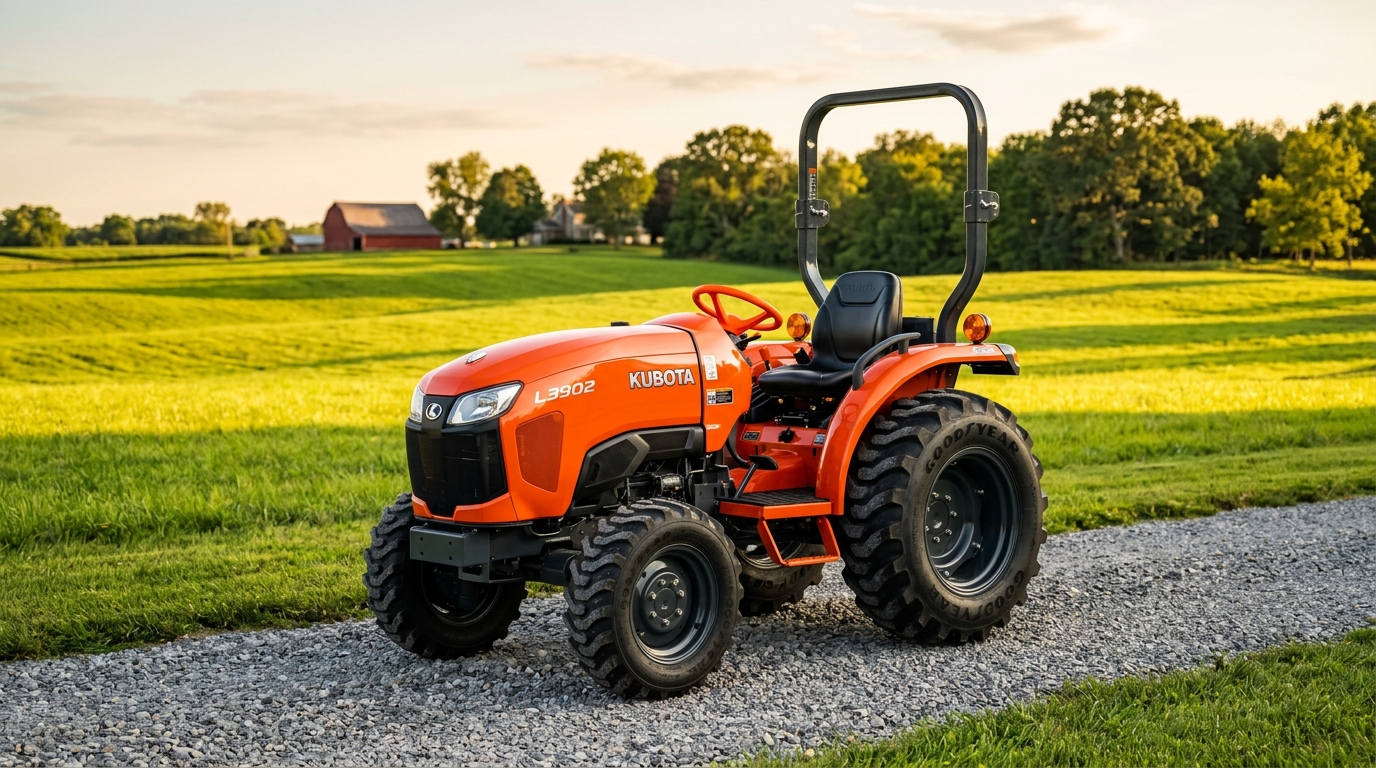
When shopping for a tractor front-end loader, the lift capacity printed on marketing brochures is almost always measured at the loader pivot pins at maximum lift height. In the real world, materials sit in the center of the bucket or on pallet forks, which is roughly 500 mm (20 inches) ahead of the pivot pins. Because of mechanical leverage, true lift capacity at the bucket center is 25% to 35% lower than the pivot pin rating. A loader rated for 1,200 pounds at the pins can only lift roughly 850 to 900 pounds in the bucket. Always use the 500mm ahead of pins rating when comparing tractors, and ensure rear ballast weight matches or exceeds the load to protect the front axle.
table_chart Benchmark Specifications by Horsepower Tier
| Model | Engine HP | PTO HP | Hydraulic Flow | Hitch Lift | Primary Application |
|---|---|---|---|---|---|
| Kubota LA526 (on Kubota L3902) | 37.5 hp (9.4 gpm hydraulic flow) | 1,144 lb at pivot pins / 855 lb at 500mm ahead | Breakout force: 2,162 lb at pins | Max lift height: 98.0 inches (2,489 mm) | General homestead chores, 4x4 round bale transport, and topsoil grading |
| John Deere 300E (on John Deere 3038E) | 36.7 hp (9.3 gpm hydraulic flow) | 1,356 lb at pivot pins / 1,020 lb at 500mm ahead | Breakout force: 2,348 lb at pins | Max lift height: 84.0 inches (2,134 mm) | Economy utility chores, gravel driveway maintenance, and bulk mulch spreading |
| Massey Ferguson FL2814 (on MF 2850E) | 48.8 hp (12.4 gpm hydraulic flow) | 2,150 lb at pivot pins / 1,680 lb at 500mm ahead | Breakout force: 3,420 lb at pins | Max lift height: 106.0 inches (2,692 mm) | Heavy pallet fork loading, 5x6 round hay bales, and commercial rock clearing |
| Case IH L545 (on Farmall 75A) | 70.0 hp (12.5 gpm hydraulic flow) | 3,460 lb at pivot pins / 2,620 lb at 500mm ahead | Breakout force: 4,890 lb at pins | Max lift height: 126.0 inches (3,200 mm) | Loading high-side silage wagons, bulk fertilizer super-sacks, and logging |
1. Why Brochure Loader Lift Ratings Are Deceptive
2. The Physics of Mechanical Leverage: Pivot Pin vs 500mm
3. Breakout Force vs Full Height Lift Capacity
4. Rear Counterweight Physics and Front Axle Protection
5. Hydraulic Pump Flow (GPM) vs Lifting Strength
6. Field Buying Rules for Loader Work
Equipment Buyer's Verification Checklist
Front Loader Pre-Purchase & Ballast Inspection
- check_box_outline_blank Verify skid-steer quick-attach (SSQA) locking lever pins engage fully into bucket pocket wedges
- check_box_outline_blank Inspect loader boom cross-tube welds and hydraulic cylinder eyelet castings for stress cracks
- check_box_outline_blank Check hydraulic cycle times at rated 2,200 engine RPM: full raise should take under 4.5 seconds
- check_box_outline_blank Measure rear tire lift when lifting a test load: rear tires must remain firmly planted without tire hop
- check_box_outline_blank Verify grease point condition: all 8 loader boom pivot pins must show fresh grease purge without dry rust
help_outline Frequently Asked Questions
What is the difference between pivot pin lift capacity and 500mm ahead lift capacity?
Pivot pin lift capacity is measured directly at the hinge pin connecting the loader boom arms to the bucket bracket. Lift capacity at 500mm is measured 20 inches forward of the pins, which represents the actual center of gravity of materials sitting inside a bucket or on pallet forks. Lift capacity at 500mm is typically 25% to 35% lower than pivot pin ratings.
Why do I need rear ballast when using a front-end loader?
Without rear counterweight, the weight of the loaded bucket pivots across the front axle like a seesaw, lifting the rear drive tires off the ground. This eliminates rear braking, causes loss of steering traction, and overloads the front axle casting, frequently resulting in snapped steering spindles and rollover accidents.
Does higher hydraulic GPM mean my loader will lift more weight?
No. Hydraulic pressure in pounds per square inch (psi) and cylinder bore diameter determine how much weight a loader can lift. Hydraulic pump flow in gallons per minute (gpm) determines how quickly the loader raises, lowers, and curls.
How much weight can a 35 to 40 horsepower tractor front loader realistically lift?
A standard 35 to 40 horsepower compact tractor typically has a pivot pin rating of 1,200 to 1,400 pounds. In actual field conditions with a bucket or pallet forks (500mm ahead of pins), real-world lift capacity is approximately 850 to 1,050 pounds to full height.
Specialist with All About Tractors, focusing on agricultural powertrain performance, implement geometry, and field test diagnostics. All specifications cross-referenced with certified manufacturer technical sheets.