How Many Hours Is Too Many on a Used Diesel Tractor? Expected Lifespans & Wear Milestones
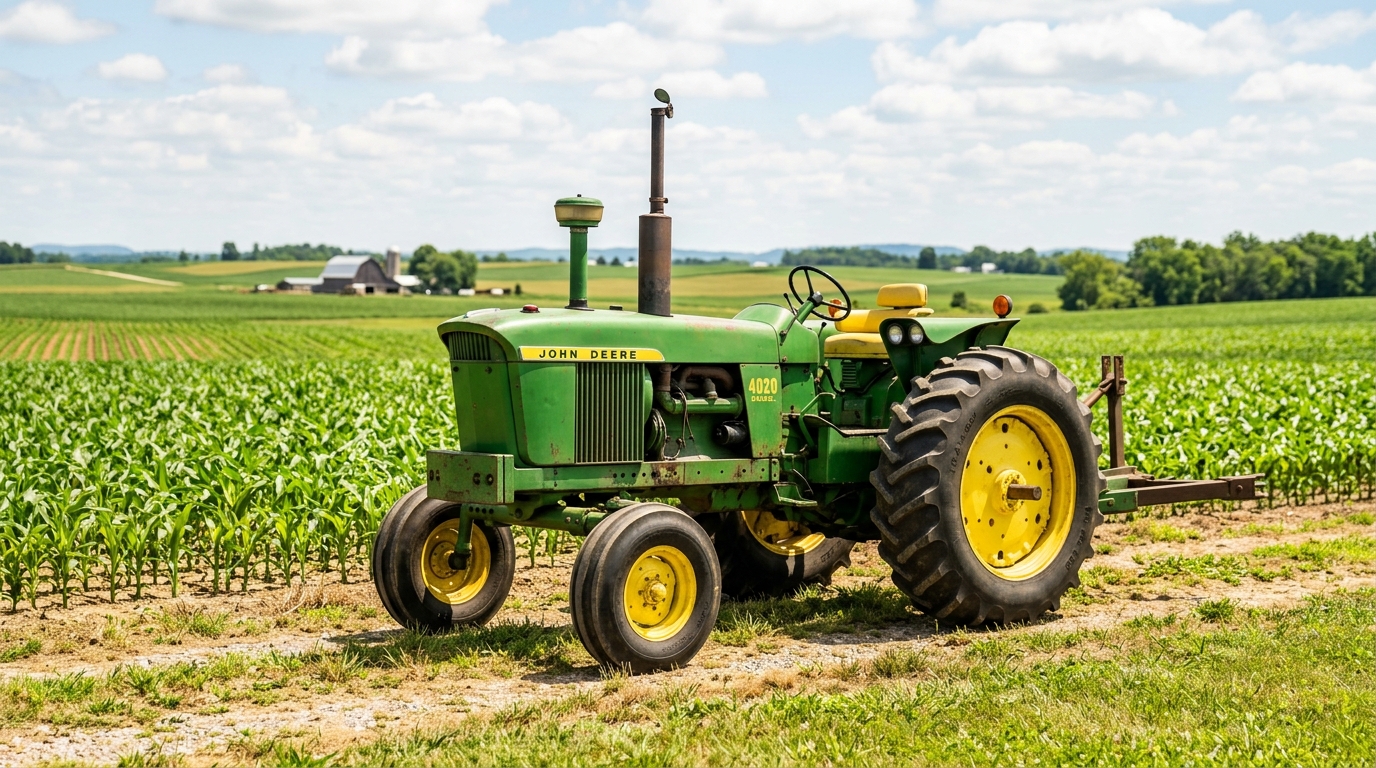
Unlike automotive engines that are near the end of their operational life at 200,000 miles (roughly 4,000 engine hours), quality water-cooled agricultural diesel engines are designed to operate for 6,000 to 10,000 hours before requiring a major internal overhaul. Heavy-duty commercial row-crop tractors with wet-sleeve cylinder liners frequently exceed 12,000 to 15,000 hours when properly maintained. For compact tractors under 45 HP, 2,000 to 3,000 hours represents mid-life; for full-size utility and agricultural tractors, 4,000 to 6,000 hours is common working condition. Maintenance history, fluid cleanliness, and cold-start compression matter far more than the number on the hour meter.
table_chart Benchmark Specifications by Horsepower Tier
| Model | Engine HP | PTO HP | Hydraulic Flow | Hitch Lift | Primary Application |
|---|---|---|---|---|---|
| John Deere 4020 (Wet-Sleeve Benchmark) | 95 hp (6-cylinder 404 ci diesel) | Expected engine life: 10,000 to 14,000 hours | Cylinder design: Wet replaceable cylinder sleeves | In-frame rebuild cost: $3,500 to $5,000 | Legendary long-term durability and economical in-frame engine overhauls |
| Ford 5000 (Parent-Bore Utility Benchmark) | 70 hp (4-cylinder 256 ci diesel) | Expected engine life: 7,000 to 9,000 hours | Cylinder design: Parent-bore cast block | Out-of-frame rebuild cost: $5,500 to $7,500 | Budget haying, livestock feeding, and simple mechanical durability |
| International Harvester 1066 (Turbocharged Heavy Draft) | 125 hp (6-cylinder 414 ci DT-414 turbo) | Expected engine life: 8,000 to 12,000 hours | Cylinder design: Wet sleeve with jet-cooled pistons | In-frame rebuild cost: $4,000 to $6,000 | High-hour heavy tillage, deep discing, and high-capacity PTO baling |
1. What an Operating Hour Actually Means on a Diesel Tractor
2. Wet-Sleeve vs Parent-Bore Engine Longevity
3. Critical Mechanical Wear Milestones by Operating Hours
4. Detecting Hour Meter Rollbacks and Gauge Replacements
5. Why Maintenance History Trumps Low Operating Hours
6. The Buying Verdict: What Hour Range to Target
Equipment Buyer's Verification Checklist
High-Hour Used Tractor Pre-Purchase Test
- check_box_outline_blank Pull engine oil dipstick and inspect for gritty carbon particles or burnt petroleum smell
- check_box_outline_blank Perform crankcase blow-by test: remove oil filler cap while engine runs at operating temperature; look for pulsing smoke or oil mist
- check_box_outline_blank Inspect drawbar hitch hole for severe elongation or egg-shaped pin wear
- check_box_outline_blank Check radiator coolant with test strip to confirm presence of supplemental coolant additives (SCA) preventing wet-sleeve cavitation
- check_box_outline_blank Test PowerShift transmission shuttle engagement: forward-to-reverse shift must engage within 1.5 seconds without harsh clunking
help_outline Frequently Asked Questions
How many hours will a diesel tractor engine last before needing an overhaul?
With proper oil changes and cooling system maintenance, quality agricultural diesel engines typically run between 6,000 and 10,000 operating hours before requiring a cylinder overhaul. Heavy-duty commercial wet-sleeve engines often exceed 12,000 to 15,000 hours.
Is 3,000 hours considered high for a used tractor?
No. On a mid-size utility or agricultural tractor, 3,000 hours represents roughly one-third of its expected service life. On a sub-compact tractor doing light residential chores, 3,000 hours is mid-to-high life, but with good maintenance, it still has substantial operating life remaining.
What is an in-frame engine overhaul on a tractor?
An in-frame overhaul is possible on tractors with wet-sleeve cylinder engines. The mechanic removes the oil pan and cylinder head with the engine remaining inside the tractor chassis, slides out the old cylinder sleeves and pistons, and installs new sleeves, rings, and rod bearings. This saves thousands of dollars in shop labor compared to pulling the entire engine.
How can I tell if a tractor hour meter has rolled over or stopped working?
Examine physical wear on the foot pedals, steering wheel grip, drawbar pin hole, and seat upholstery. If these components show extensive metal wear, bare steel, and elongated holes, but the hour meter shows low numbers (like 1,200 hours), the meter has likely failed, been replaced, or rolled over past 10,000 hours.
Specialist with All About Tractors, focusing on agricultural powertrain performance, implement geometry, and field test diagnostics. All specifications cross-referenced with certified manufacturer technical sheets.