Rotary Cutter (Bush Hog) Sizing Guide: Horsepower, Slip Clutch, and Implement Matching
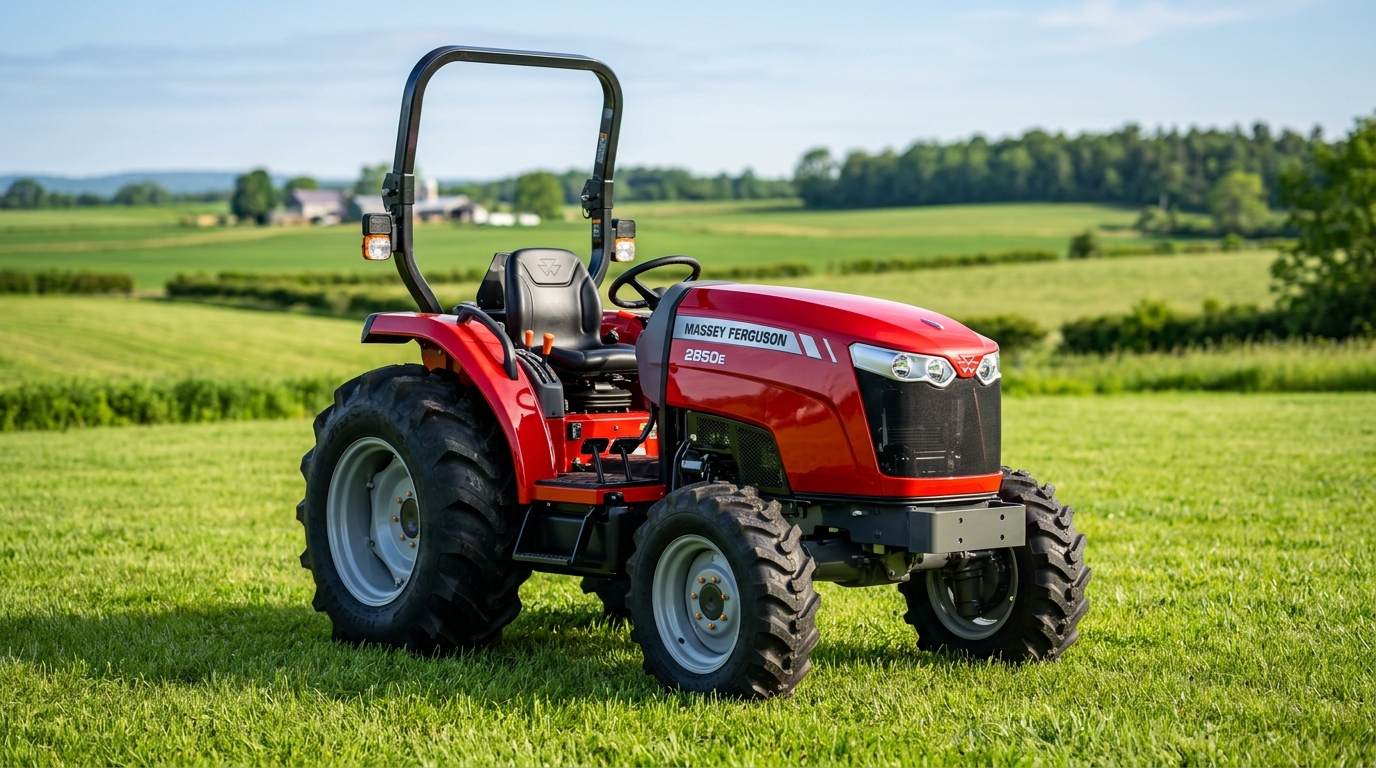
The fundamental engineering rule for sizing a rotary cutter (brush hog) is 5 certified PTO horsepower per foot of cutter width for light pasture clipping, and 7 to 8 PTO horsepower per foot for thick brush, saplings, and overgrown fields. A 4-foot cutter requires a minimum 20 PTO horsepower tractor; a 5-foot cutter requires 25 to 30 PTO horsepower; a 6-foot cutter requires 40 to 50 PTO horsepower; and an 8-foot dual-spindle cutter requires 60 to 75 PTO horsepower. Additionally, tractor bare weight must exceed the cutter weight by at least 1.5 times, or front ballast weights must be installed to prevent loss of steering traction when raising the heavy cutter on slopes.
table_chart Benchmark Specifications by Horsepower Tier
| Model | Engine HP | PTO HP | Hydraulic Flow | Hitch Lift | Primary Application |
|---|---|---|---|---|---|
| Kubota L3902 (30.6 PTO hp) | 37.5 hp (30.6 PTO hp) | Matches 5-foot medium-duty rotary cutter (60-inch width) | 9.4 gpm (35.6 lpm) | 1,985 lb (900 kg) | Medium pasture maintenance, 1.5-inch sapling clearing, and trail grooming |
| John Deere 3038E (30.0 PTO hp) | 36.7 hp (30.0 PTO hp) | Matches 5-foot standard-duty rotary cutter (60-inch width) | 9.3 gpm (35.2 lpm) | 1,356 lb (615 kg) | Routine field mowing, ditch bank edging, and horse pasture clipping |
| Massey Ferguson 2850E (39.0 PTO hp) | 48.8 hp (39.0 PTO hp) | Matches 6-foot heavy-duty rotary cutter (72-inch width) | 12.4 gpm (47.0 lpm) | 2,425 lb (1,100 kg) | Heavy brush cutting, 2-inch hardwood saplings, and hunting food plots |
| Case IH Farmall 75A (62.0 PTO hp) | 70 hp (62.0 PTO hp) | Matches 8-foot dual-spindle or 10-foot pull-type batwing cutter | 12.5 gpm (47.3 lpm) | 3,307 lb (1,500 kg) | Commercial roadside right-of-way mowing and broad-acre pasture management |
1. The Core Engineering Rule: 5 PTO Horsepower Per Foot of Cut
2. Rotary Cutter Sizing and Tractor Matching Matrix
3. Driveline Protection: Slip Clutch vs Shear Bolt
4. Weight Ratio and Front Ballast Safety Rules
5. Deck Steel Gauge, Stump Jumpers, and Blade Tip Speeds
6. Field Operation and Height Adjustment Best Practices
Equipment Buyer's Verification Checklist
Rotary Cutter Pre-Operation Safety Checklist
- check_box_outline_blank Check gearbox oil level: remove top check plug and verify 80W-90 or 85W-140 gear oil reaches plug threads
- check_box_outline_blank Inspect slip clutch springs: measure spring compression with a caliper to ensure uniform tension across all bolts
- check_box_outline_blank Verify blade pivot freedom: blades must swing freely on shouldered pivot bolts without binding or seizing
- check_box_outline_blank Inspect PTO input shaft safety shield: verify plastic safety tube spins freely and anchor chains are secured to tractor frame
- check_box_outline_blank Ensure lower three-point lift arm pins are locked with hardened linchpins, not improvised nails or wire
help_outline Frequently Asked Questions
What happens if my tractor does not have enough PTO horsepower for my rotary cutter?
If PTO horsepower is insufficient, the engine will bog down as soon as the blades hit thick vegetation. The operator will be forced to crawl at agonizingly slow ground speeds (under 1 mph), the engine will run excessively hot, and repeated engine lugging will glaze cylinder liners and ruin the tractor PTO clutch.
Is a slip clutch better than a shear pin on a rotary cutter?
Yes, for most landowners and farmers. A slip clutch absorbs momentary shock loads when hitting rocks or stumps without stopping work. A shear pin breaks completely, requiring you to shut down the tractor, find tools, and install a replacement Grade 2 bolt before continuing.
Can a 25 horsepower tractor run a 5-foot rotary cutter?
A 25 gross horsepower tractor typically delivers only 19 to 20 PTO horsepower. It can handle a lightweight 5-foot cutter in sparse, dry lawn grass, but it will severely struggle and bog down in heavy field pasture, damp clover, or brush. For a 25 hp tractor, a 48-inch (4-foot) cutter is the proper engineering match.
Why should the front of the rotary cutter deck be lower than the back?
Setting the front of the deck 1 to 2 inches lower than the rear allows the blades to cut the plant material once. If the deck is level, the rear of the blades recuts the mulched material, which requires extra tractor horsepower and leaves ragged clippings on the field.
Specialist with All About Tractors, focusing on agricultural powertrain performance, implement geometry, and field test diagnostics. All specifications cross-referenced with certified manufacturer technical sheets.