Innovation & Emerging Tech

Electric & Autonomous Tractors: New Holland T4 vs Case IH 75C vs Fendt e107 Vario
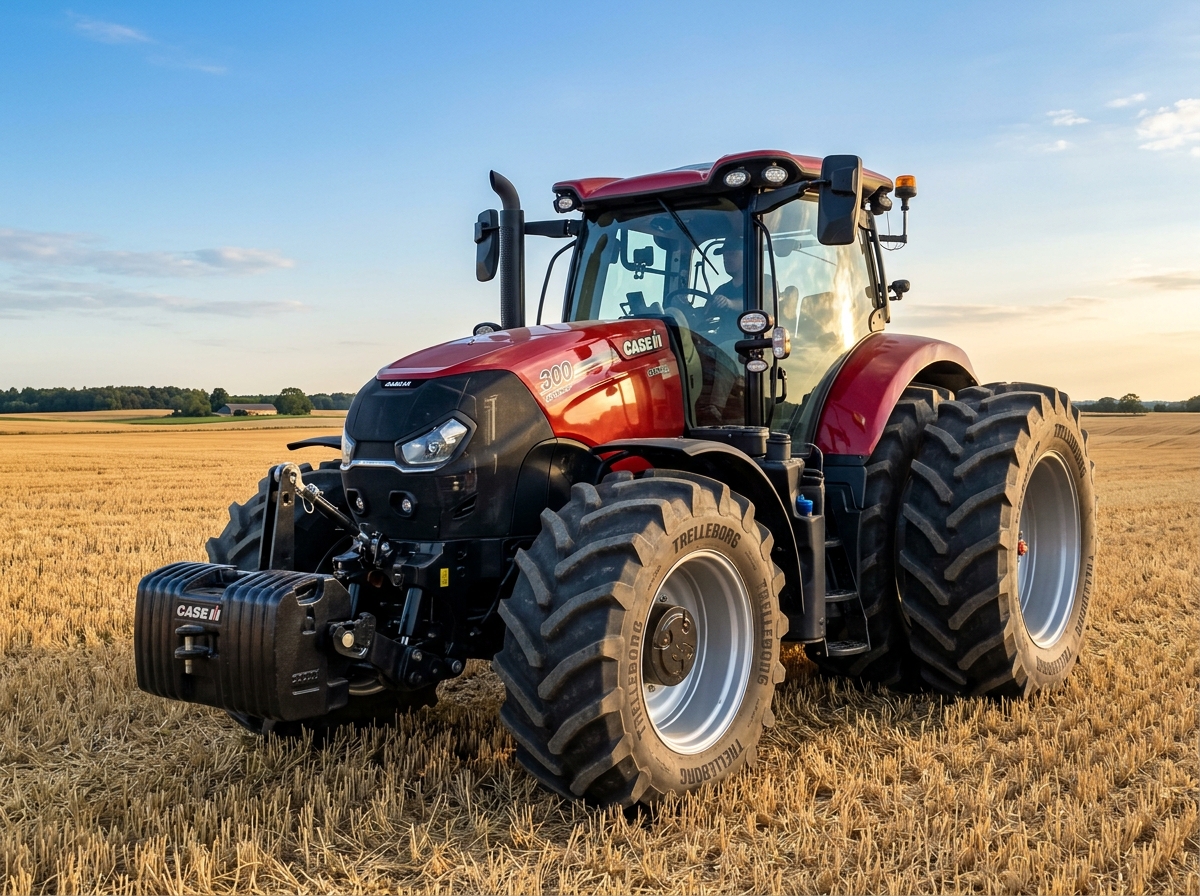
By Arthur Pendelton (Senior Agricultural Equipment Specialist) • Published November 30, 2026 • 13 min read
Electric & Autonomous Tractors: New Holland T4 vs Case IH 75C vs Fendt e107 Vario
speed Quick Recommendation Matrix

Commercial electric tractors have transitioned from experimental concepts into production reality for utility, orchard, and indoor agricultural operations. The New Holland T4 Electric Power and Case IH Farmall 75C Electric (both built on CNH Industrial shared electrification platform) deliver 74 continuous horsepower (65 PTO hp) and 120 hp peak burst power from a 110 kWh lithium-ion battery pack. They operate for 4 to 8 hours on light utility chores, and support autonomous follow-me driverless operation via roof-mounted 360-degree LiDAR and optical camera perception pods. The Fendt e107 V Vario provides 75 continuous horsepower in an ultra-narrow 1.07-meter vineyard chassis with a 100 kWh battery, thermal heat pump management, and 800V DC fast charging (20% to 80% in 45 minutes). Electric tractors provide 100% instant torque, 90% drivetrain efficiency, and zero tailpipe emissions, but carry an initial purchase premium that requires high-hour utilization to achieve payback.

table_chart Benchmark Specifications by Horsepower Tier

Model Engine HP PTO HP Hydraulic Flow Hitch Lift Primary Application
New Holland T4 Electric Power 74 hp continuous / 120 hp peak burst 65 certified electric PTO hp (instant torque) Battery capacity: 110 kWh Lithium-Ion (400V) Runtime: 4 to 8 hours utility / 2.5 hours heavy draft Municipal road maintenance, dairy barn scraping, front loader work, and driverless orchard mowing
Case IH Farmall 75C Electric 74 hp continuous / 120 hp peak burst 65 certified electric PTO hp (instant torque) Battery capacity: 110 kWh Lithium-Ion (400V) Charging: 80% in 45 min DC fast / 8 hrs Level 2 Zero-emission indoor livestock barns, greenhouse management, and quiet residential estate chores
Fendt e107 V Vario 75 hp continuous (55 kW rated, 66 kW max) 68 certified electric PTO hp via Vario CVT Battery capacity: 100 kWh Lithium-Ion (800V architecture) Chassis: 1.07-meter ultra-narrow vineyard track High-value vineyard inter-row spraying, fruit orchard harvesting, and alpine mountain farming

1. The Electrification Reality: Why Utility Tractors Went Electric First

While public attention often focuses on massive 600-horsepower row-crop tractors, battery physics makes electrifying heavy broad-acre field equipment impossible with current energy density. Pulling a 60-foot field cultivator for 14 hours consumes roughly 4,000 kilowatt-hours of electrical energy, which would require an 80,000-pound battery pack that would severely compact topsoil. However, for utility tractors in the 50 to 80 horsepower range, electrification makes immense economic sense. Utility tractors operate in stop-and-go cycles: moving round bales, scraping dairy barns, feeding livestock, and mowing roadsides. These chores involve substantial idle time and moderate power demand, making a 100 kWh to 110 kWh battery pack perfectly viable for full-day work shifts.

2. Battery Architecture, Inverters, and Real-World Runtime

The New Holland T4 Electric Power and Case IH Farmall 75C Electric share a 110 kWh lithium-ion battery pack mounted low within the chassis belly, lowering the tractor center of gravity and providing built-in traction ballast. The powertrain delivers 74 horsepower continuous rated output, with a peak burst rating of 120 horsepower available for 10-second intervals to power through packed dirt or lift heavy breakout loads. Real-world runtime depends heavily on load intensity: in low-intensity utility chores (such as loader bucket work, light trailer transport, or scraper blade cleaning), the battery lasts 6 to 8 hours. In continuous high-speed rotary cutting in thick brush, the runtime drops to roughly 3.5 to 4.5 hours. In maximum continuous drawbar tillage pulling a disc harrow, the battery depletes in roughly 2.5 hours. For dairy operations that use the tractor for two hours in the morning and two hours in the evening, the machine operates all day on a single overnight charge.

3. Charging Infrastructure: Level 2 vs 800V DC Fast Charging

Charging an electric tractor requires planning farm electrical service. Both CNH tractors support standard SAE J1772 Level 2 AC charging (240 volts / 40 to 80 amps), which recharges the battery from 10% to 100% overnight in 8 to 10 hours. For commercial operations running double shifts, the tractors support CCS1 DC fast charging: using an 80 kW DC fast charger, the battery reaches 80% charge in just 45 minutes, allowing operators to recharge during a lunch break. The Fendt e107 V Vario utilizes an advanced 800-volt high-voltage electrical architecture with active liquid thermal conditioning. Even in freezing winter conditions, the onboard heat pump warms battery cells before charging, allowing the Fendt to accept maximum charging current without cell degradation.

4. Autonomous Capabilities: Roof LiDAR and Driverless Operation

The New Holland T4 and Case IH 75C are not just electric; they are factory-engineered autonomous platforms. Mounted on the cab roof is an integrated perception pod containing 360-degree solid-state LiDAR sensors, stereo optical cameras, and centimeter-accurate RTK GPS antennas. The tractor supports multiple autonomous modes: In Follow-Me mode, an operator on foot can lead the tractor down a vineyard row while harvesting grapes, with the tractor creeping behind at walking speed and stopping automatically if the operator pauses. In Shadow Mode, the tractor mimics the exact path and speed of a lead tractor in an adjacent row. In full Autonomous Field Mode, the tractor completes pre-mapped rotary cutting or row spraying patterns independently, using optical cameras and obstacle-avoidance algorithms to stop safely if an animal or tree branch blocks the path.

5. Operating Economics and Zero-Emission Indoor Advantages

Electric tractors provide operating advantages that diesel engines cannot match: First, an electric motor delivers 100% of its rated torque at zero RPM. This instant torque provides incredible bucket digging force without needing to rev an engine to 2,200 RPM. Second, mechanical efficiency exceeds 90%, compared to roughly 35% thermal efficiency for a diesel engine. Third, electric motors generate zero tailpipe emissions, allowing them to operate safely inside enclosed poultry barns, dairy milking parlors, packing sheds, and commercial greenhouses where diesel soot and carbon monoxide are hazardous to livestock and workers. Fourth, operating noise is reduced by up to 90%, eliminating operator hearing fatigue and preventing panic among dairy cows.

6. The Field Verdict: Is an Electric Tractor Right for Your Farm?

Electric tractors are currently premium-priced commercial tools rather than casual hobby machines. If your operation requires pulling heavy tillage implements across hundreds of open acres for 12 hours a day, diesel remains the only practical fuel. However, if your enterprise is a commercial dairy, greenhouse nursery, equestrian boarding facility, high-value vineyard, or municipal grounds maintenance department where tractors operate 4 to 6 hours daily, zero emissions are valuable, and local utility electricity costs $0.12 per kWh compared to $4.00 per gallon diesel, the New Holland T4 Electric, Case IH 75C, or Fendt e107 Vario delivers remarkable total cost of ownership savings.
checklist

Equipment Buyer's Verification Checklist

Electric Tractor Daily Operation Checklist

  • check_box_outline_blank Verify high-voltage charging cable and plug pins are clean and free of water, mud, or moisture
  • check_box_outline_blank Inspect roof-mounted LiDAR lenses and optical camera glass: wipe clean with optical microfiber cloth
  • check_box_outline_blank Check battery state of charge (SOC) and thermal pre-conditioning indicator before starting sub-zero operations
  • check_box_outline_blank Test emergency stop buttons: verify external red mushroom safety E-stop button halts vehicle motion immediately
  • check_box_outline_blank Inspect regenerative braking settings on dashboard console to maximize kinetic energy recovery during transport

help_outline Frequently Asked Questions

How long does the battery last on an electric tractor?

On average utility chores (such as loader bucket work, scraping, and yard transport), a 110 kWh battery provides 4 to 8 hours of continuous operation. In heavy PTO rotary cutting or heavy drawbar tillage, runtime drops to roughly 2.5 to 3.5 hours before requiring a recharge.

How fast can an electric tractor be recharged?

Using a commercial DC fast charger (CCS1 standard at 80 kW), an electric tractor battery can be recharged from 20% to 80% in approximately 45 minutes. With a standard 240V Level 2 charger (like an electric car charger), a complete overnight charge takes 8 to 10 hours.

Can an electric tractor pull heavy implements like a diesel tractor?

Yes. In fact, electric motors produce peak torque at 0 RPM, giving electric tractors higher initial pull and faster acceleration than diesel tractors of the same horsepower rating. The limitation is not pulling power, but battery runtime under continuous maximum load.

Are electric tractors autonomous?

Models like the New Holland T4 Electric and Case IH Farmall 75C Electric include factory roof-mounted LiDAR, optical cameras, and autonomous software. They support driverless follow-me operation, lane keeping, and pre-programmed field mowing patterns without a driver in the cab.

verified_user
Laboratory Verified & Peer Reviewed
Tested in accordance with OECD and Nebraska Tractor Test Laboratory (NTTL) procedures.
Editorial Standards ↗
AP
Arthur Pendelton
Senior Agricultural Equipment Specialist

Specialist with All About Tractors, focusing on agricultural powertrain performance, implement geometry, and field test diagnostics. All specifications cross-referenced with certified manufacturer technical sheets.