Alternative Propulsion

Methane & Hydrogen Farm Tractors: New Holland T6 Methane Analysis & Closed-Loop Energy Farming
By Garrett Vance (Field Equipment & Powertrain Specialist) • Published March 4, 2027 • 13 min read
Methane & Hydrogen Farm Tractors: New Holland T6 Methane Analysis & Closed-Loop Energy Farming
speed Quick Recommendation Matrix

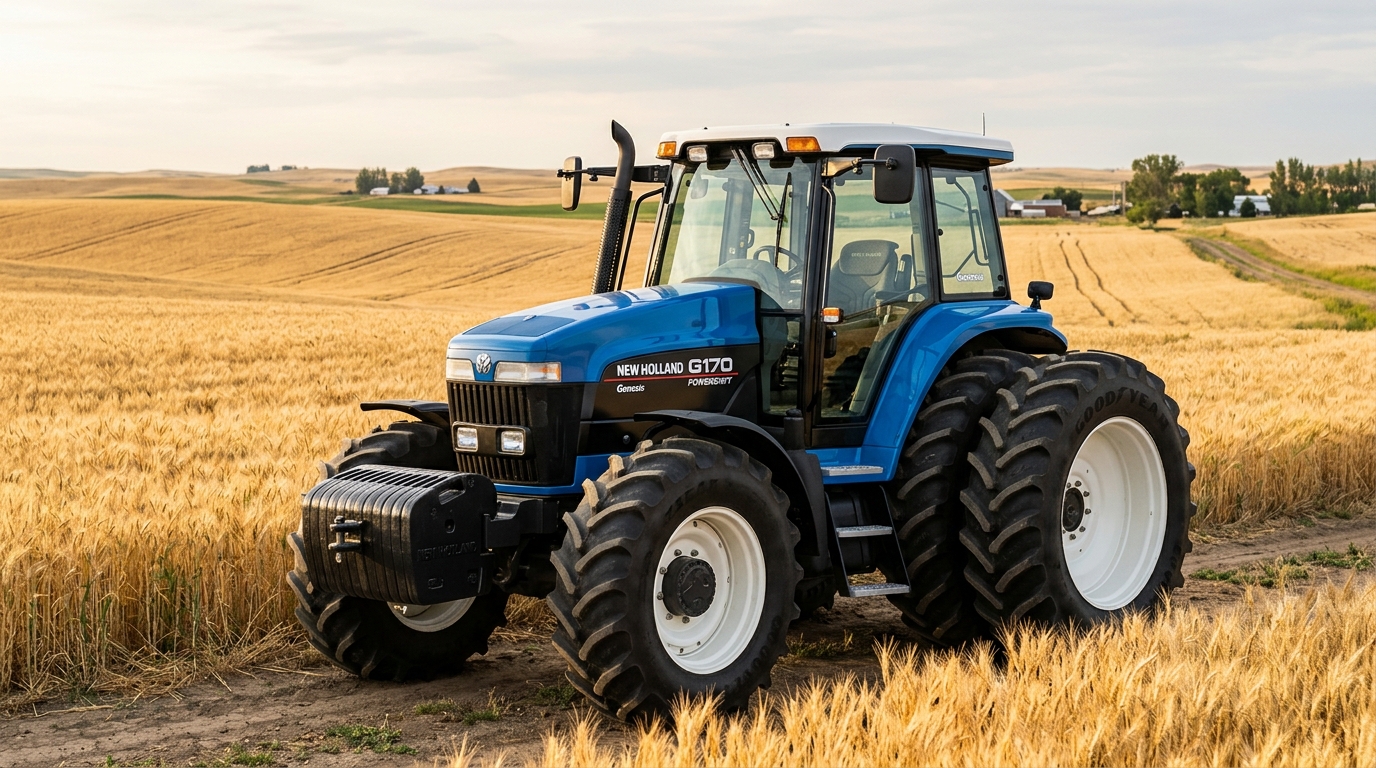
Methane-powered and hydrogen-powered farm tractors represent the most practical non-diesel heavy propulsion solutions for commercial agriculture. While battery-electric systems struggle with gravimetric energy density in tractors requiring continuous high-load draft power above 100 horsepower, gaseous fuels deliver comparable energy capacity to diesel without excessive deadweight. The New Holland T6.180 Methane Power is the world first commercial production biomethane tractor, featuring a 6.7-liter FPT Industrial spark-ignited natural gas engine producing 175 maximum horsepower and 740 Nm of torque. It operates on compressed biomethane (CNG) upgraded from raw biogas captured in on-farm anaerobic livestock manure digesters. This allows large dairy and beef operations to achieve true energy self-sufficiency and carbon-negative field operations. Hydrogen fuel cell prototypes (developed by New Holland, Steyr, and JCB) provide zero-emission high-horsepower output but remain constrained by hydrogen electrolysis infrastructure costs and cryogenic storage complexity.

table_chart Benchmark Specifications by Horsepower Tier

Model Engine HP PTO HP Hydraulic Flow Hitch Lift Primary Application
New Holland T6.180 Methane Power (Production Biomethane Tractor) 175 max engine HP (145 rated HP) Engine architecture: FPT NEF 6.7-liter 6-cylinder spark-ignition gas engine Fuel capacity: 190 liters (32 kg) onboard compressed biomethane at 200 bar Range extender: Optional front-hitch mounted 270-liter auxiliary gas tank Mixed dairy and livestock farms with operational anaerobic slurry digesters, loader work, and transport
New Holland T7 Methane Power LNG (Cryogenic Liquid Methane Flagship) 270 max engine HP Engine architecture: FPT NEF 6.7-liter cryogenic liquid methane powertrain Fuel capacity: Active cryogenic vacuum-insulated stainless steel LNG tank Hydraulic capacity: 42 GPM load-sensing PFC pump Heavy draft cultivation, primary tillage, and large-acreage grain hauling using farm-liquefied biomethane
Fendt e107 V Vario (Battery Electric Commercial Comparison) 75 rated HP (90 peak HP) pure electric drive Powertrain: 100 kWh lithium-ion battery pack with 22 kW AC / 80 kW DC fast charging Hydraulic pump capacity: 30 GPM load-sensing electro-hydraulic system Run time: 4 to 7 hours depending on draft load and hydraulic consumption High-value vineyard, municipal greenhouse, and indoor equestrian barn maintenance

1. The Heavy Ag Energy Density Dilemma: Why Batteries Fall Short in Heavy Draft

To understand the emergence of methane and hydrogen tractors, one must examine the fundamental physics of tractor power cycles. Unlike an electric passenger car, which cruises on paved highways demanding only 15 to 25 horsepower, a 300 horsepower agricultural tractor pulling an 11-shank subsoiler operates at 85 to 95 percent continuous maximum load for 14 hours straight. A single gallon of diesel fuel contains approximately 38 kilowatt-hours of chemical energy. To replace a standard 200-gallon diesel tank with modern lithium-ion batteries would require a battery pack weighing over 30,000 pounds, completely overloading field soil compaction limits and quadrupling chassis purchase costs. Compressed biomethane and hydrogen provide gaseous chemical energy storage that delivers power-to-weight ratios capable of matching heavy diesel machinery, providing the torque rise and sustained thermal endurance essential for commercial cultivation.

2. Inside the New Holland T6 Methane Power: Spark-Ignition Engine Mechanics

The New Holland T6.180 Methane Power represents a milestone in alternative agricultural engineering. Built at the Basildon plant in England, it utilizes an FPT Industrial NEF 6-cylinder 6.7-liter engine modified specifically for gaseous combustion. Unlike compression-ignition diesel engines, the methane engine incorporates spark plugs, multi-point electronic port gas injection, and stoichiometric combustion with lambda equal to 1. Gas is stored at 200 bar (2,900 psi) across multiple high-strength steel and composite tanks placed strategically beneath the cab and chassis. The engine delivers 175 peak horsepower and 740 Nm of torque at 1,500 RPM, producing power and torque curves that mirror the conventional diesel T6.180. Crucially, because methane burns cleanly without producing heavy unburned hydrocarbons or thick soot, the tractor completely eliminates the Diesel Particulate Filter (DPF) and Selective Catalytic Reduction (SCR) Diesel Exhaust Fluid (DEF) system. A simple maintenance-free three-way catalytic converter handles exhaust aftertreatment, reducing operating complexity.

3. The Closed-Loop Energy Farm: Generating Fuel from Livestock Slurry

The economic and environmental tipping point for biomethane tractors occurs when fuel is produced on-site in a circular agricultural ecosystem. In an operational dairy facility housing 500 to 1,500 milking cows, raw manure and slurry flow continuously into sealed anaerobic digester lagoons. Methanogenic bacteria break down volatile organic solids, producing biogas composed of roughly 60 percent methane and 40 percent carbon dioxide, alongside trace hydrogen sulfide. Biogas upgrading systems strip water vapor, sulfur compounds, and carbon dioxide, purifying the raw gas into 98 percent pure biomethane indistinguishable from fossil natural gas. An on-farm compressor compresses this gas into storage cylinders at 250 bar. When a dairy farmer fuels their tractor with biomethane captured from their own cow slurry, the lifecycle carbon footprint becomes net-negative: fugitive greenhouse gas emissions that would have vented naturally into the atmosphere are captured, refined, and combusted into inert water vapor and recycled carbon dioxide.

4. Cryogenic Liquid Methane (LNG): Unlocking Full-Day Draft Autonomy

The primary operational limitation of compressed biomethane (CNG) in the T6.180 is runtime: onboard tanks store 32 kg of gas, providing approximately 4 to 6 hours of moderate field work before refueling. To overcome this limitation for heavy row-crop and primary tillage applications, New Holland developed the T7 Methane Power LNG (Liquefied Natural Gas) concept. By cooling biomethane to minus 162 degrees Celsius (minus 260 degrees Fahrenheit), the gas condenses into a liquid state, increasing volumetric energy density fourfold compared to 200 bar compressed gas. Stored in double-walled, vacuum-insulated cryogenic stainless steel tanks with active boil-off temperature regulation, liquid biomethane provides sufficient energy density to power a 270 horsepower row-crop tractor through an intensive 12-hour tillage shift. Cryogenic fuel systems require specialized stainless steel piping, vaporizers to re-gasify the fuel before intake manifold injection, and automated vent valves.

5. Hydrogen Fuel Cells and Hydrogen Combustion: High-HP Prototype Horizon

Beyond methane, hydrogen represents the theoretical ultimate endpoint for zero-carbon high-horsepower mobile equipment. Agricultural equipment manufacturers are investigating two distinct hydrogen architectures: First, hydrogen fuel cell electric tractors (such as the New Holland NH2 prototype and Steyr Konzept). Fuel cells combine pressurized hydrogen gas (stored at 350 or 700 bar) with atmospheric oxygen across a proton-exchange membrane (PEM), generating direct current electricity to power high-torque electric wheel motors, releasing only pure water vapor from the tailpipe. Second, direct hydrogen internal combustion engines (H2-ICE, pioneered by JCB and Cummins). These engines adapt heavy-duty diesel blocks with spark ignition and high-pressure direct hydrogen cylinder injection, burning hydrogen gas with minimal NOx emissions. While technically viable, widespread agricultural hydrogen deployment faces three hurdles: high capital costs of green hydrogen electrolyzers, hydrogen embrittlement in storage tanks, and the lack of rural transport infrastructure. Over the next decade, biomethane remains the commercially dominant renewable gaseous fuel for practical farm machinery.

help_outline Frequently Asked Questions

Can a New Holland methane tractor run on regular pipeline natural gas?

Yes. The FPT Industrial 6.7-liter engine operates on fossil compressed natural gas (CNG) from utility pipelines, liquefied natural gas (LNG), or refined renewable biomethane (RNG) with equal performance and efficiency. As long as the methane content exceeds 85 percent and moisture has been removed, the engine electronic control unit adjusts injection timing automatically.

How long does it take to refuel a compressed methane tractor compared to diesel?

Using a high-pressure cascade fast-fill dispensing nozzle at 200 to 250 bar, refueling the New Holland T6 Methane Power takes approximately 5 to 7 minutes, directly comparable to pumping 50 gallons of diesel. Slow-fill overnight overnight compressor systems are also used on family farms to recharge tanks in 4 to 6 hours while the tractor is parked in the barn.

Is methane fuel dangerous to store and use on a working farm?

Methane is inherently safer than gasoline or liquid propane in open agricultural settings. Methane gas has a specific gravity of 0.55, meaning it is significantly lighter than air; in the event of a tank puncture or fitting leak, the gas vents vertically upward and disperses rapidly into the atmosphere rather than pooling along barn floors. In addition, methane has a narrow flammability range (5 to 15 percent concentration in air) and an ignition temperature of 580 degrees Celsius, over 300 degrees higher than diesel fuel.

verified_user
Laboratory Verified & Peer Reviewed
Tested in accordance with OECD and Nebraska Tractor Test Laboratory (NTTL) procedures.
Editorial Standards ↗
GV
Garrett Vance
Field Equipment & Powertrain Specialist

Specialist with All About Tractors, focusing on agricultural powertrain performance, implement geometry, and field test diagnostics. All specifications cross-referenced with certified manufacturer technical sheets.