Orchard & Vineyard Specialty Tractors: Sizing, Track Width, and Spray Clearance
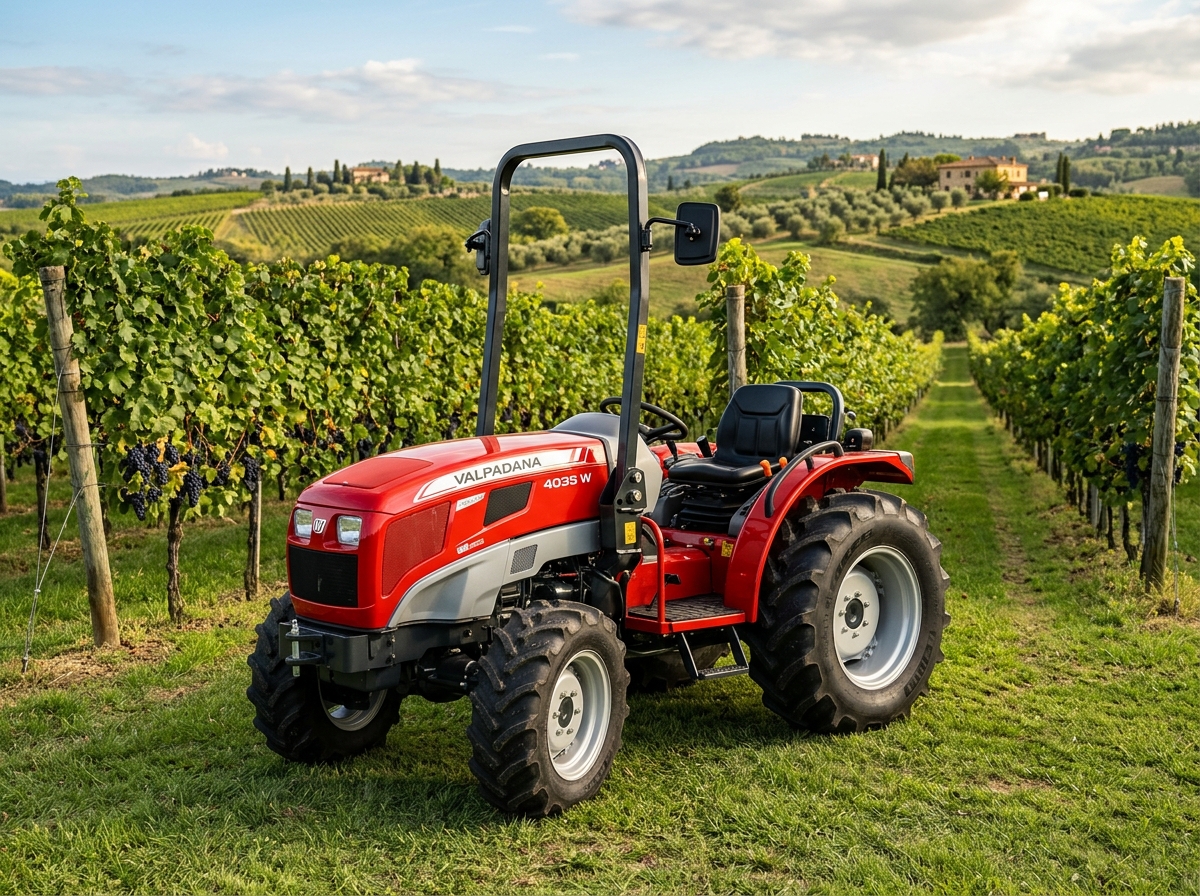
Specialty fruit, nut, and vineyard crops require dedicated tractors engineered with narrow overall widths, low overall heights, and smooth exterior sheet metal. Standard agricultural tractors are too wide to navigate narrow vine trellises (often spaced 6 to 8 feet apart) and too tall to fit under drooping fruit tree branches. Vineyard tractors (V-class) feature ultra-narrow widths from 39 to 51 inches (1.0 to 1.3 meters) to glide between grape vine rows without fruit knock-off. Orchard tractors (F-class and low-profile utility) provide wider track stability (55 to 65 inches) with low hood profiles (under 54 inches) and rounded fenders that deflect hanging branches. Specialty tractors must feature Category 4 pressurized carbon cab air filtration to protect operators from chemical mist during high-pressure air-blast spraying.
This field report is an operational deep dive within our Acreage, Sizing & Property Matching series. For the foundational engineering formulas and sizing benchmarks, read our primary pillar guide: What Size Tractor Do You Need for 5, 10, 20, or 50 Acres? (2025-2026 Practical Guide) .
table_chart Benchmark Specifications by Horsepower Tier
| Model | Engine HP | PTO HP | Hydraulic Flow | Hitch Lift | Primary Application |
|---|---|---|---|---|---|
| Fendt e107 V Vario (Ultra-Narrow Electric Vineyard) | 75 hp continuous (100 kWh battery) | Minimum track width: 42.1 inches (1.07 meters) | Cab filtration: Category 4 certified pressurized carbon air filtration | Transmission: Stepless Vario CVT (0.02 to 40 km/h) | High-density European and California vineyards, organic grape growing, and quiet night spraying |
| Case IH Farmall 75A (Low-Profile Orchard Utility) | 70 hp FPT heavy diesel | Overall track width: 62.0 inches (1.57 meters) | Cab filtration: Low-profile curved orchard cab with chemical filtration | 3-pt lift: 3,307 lb at 24 inches | Apple, peach, and citrus orchards, heavy 500-gallon air-blast sprayers, and bin trailer transport |
| Massey Ferguson 9S.425 (Large Scale Specialty Biomass) | 425 hp AGCO Power 8.4L diesel | Commercial broad-acre specialty hauling and heavy composting | Hydraulic flow: 116 gpm (440 lpm) | 3-pt lift: 26,455 lb at pins | Large commercial commercial compost spreading, heavy tree clearing, and deep orchard subsoiling |
1. Why Standard Tractors Fail in Orchards and Vineyards
2. Tractor Width Classifications: V, F, and N Chassis
3. Low-Profile Cabs, Underbelly Armor, and Branch Deflection
4. Air-Blast Spraying Demands and PTO Horsepower
5. Category 4 Cab Air Filtration and Chemical Safety
6. The Selection Verdict: Sizing for Your Crop and Row Spacing
Equipment Buyer's Verification Checklist
Orchard & Vineyard Tractor Sizing Checklist
- check_box_outline_blank Measure narrowest trellis row width at mid-summer canopy: ensure at least 12 inches clearance on each tire side
- check_box_outline_blank Verify Category 4 cab air filtration certification and check activated carbon filter replacement dates
- check_box_outline_blank Check exhaust routing: verify exhaust exits horizontally beneath the rear axle, not through an upright stack
- check_box_outline_blank Test front axle turning radius: verify minimum turning radius allows 180-degree headland row turns without three-point turns
- check_box_outline_blank Confirm PTO horsepower meets air-blast sprayer manufacturer minimum fan rating (typically 50 to 65 PTO HP)
help_outline Frequently Asked Questions
What is the difference between an orchard tractor and a vineyard tractor?
Vineyard tractors (V-class) are ultra-narrow machines with track widths between 39 and 48 inches (1.0 to 1.2 meters) designed to fit through tight vine rows. Orchard tractors (F-class) are slightly wider (55 to 65 inches) for stability, but feature low-profile hoods (under 54 inches) and curved, smooth-sided cabs to glide beneath hanging tree branches without knocking fruit off.
What is a Category 4 tractor cab?
A Category 4 tractor cab is an airtight operator enclosure certified under standard EN 15695-1. It uses active positive air pressure to prevent outside air from leaking in, and routes all incoming air through activated carbon filters to remove hazardous chemical spray vapors and aerosols during pesticide application.
How much horsepower is needed to pull an air-blast sprayer?
A 500-gallon commercial orchard air-blast sprayer requires 50 to 65 PTO horsepower just to power the high-volume axial fan and high-pressure fluid pump. When combined with the tractor ground travel power needed to pull a 6,000-pound water tank up hills, a tractor with 70 to 85 gross horsepower is recommended.
Why do orchard tractors have low-profile exhaust pipes?
Standard vertical exhaust stacks stick up above the hood and act as hooks that catch, break, and strip low-hanging fruit tree branches. Orchard tractors route the exhaust pipe beneath the chassis so it exits harmlessly behind the rear axle.
Specialist with All About Tractors, focusing on agricultural powertrain performance, implement geometry, and field test diagnostics. All specifications cross-referenced with certified manufacturer technical sheets.